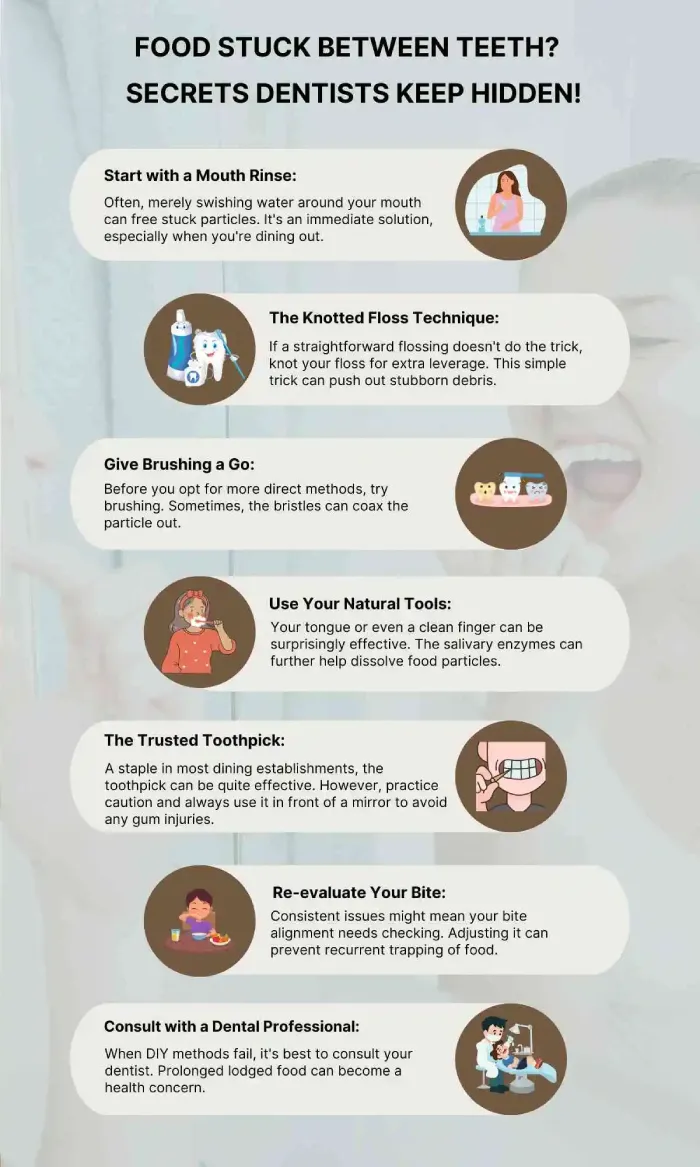

Are you struggling with that annoying piece of food stuck between your teeth? Don’t worry—you are far from alone in this frustrating problem. Thankfully, dental professionals have developed several effective methods to help you quickly and safely remove food particles from between your teeth. In this detailed guide, we will explore proven techniques for removing stuck food, uncover why this happens, and explain how you can prevent future incidents.
Why Does Food Get Stuck Between Teeth?
Food can become lodged between teeth for various reasons, ranging from natural things like the shape and spacing of your teeth to more serious dental issues. Understanding these root causes will help you prevent frequent food impaction and maintain optimal oral health.
Natural Tooth Structure and Gaps
Everyone’s mouth is unique. Some people have very tight contacts between their teeth, rarely letting food particles slip in. Others have slight gaps or irregular spacing, making them natural “food traps.” These gaps can range from tiny spaces that catch small crumbs to larger openings between teeth caused by genetics or wear and tear.
Gum Disease (Periodontal Disease)
Gum disease is a significant factor in food impaction. When gums become inflamed and start to recede from teeth, they create pockets where food can lodge. If untreated, this can worsen and lead to bone loss around the teeth, making the spaces even bigger and trapping more debris. More seriously, gum disease has been linked with systemic health issues like heart disease, making it important to address.
Tooth Decay and Cavities
Cavities create holes and pits in your tooth enamel where food easily gets stuck. This makes removal difficult and creates an environment where bacteria thrive, potentially worsening decay and leading to pain or infection.
Bite and Alignment Problems
Your bite—how your upper and lower teeth come together—plays an important role in food trapping. Misaligned teeth, uneven wear, or shifts caused by missing teeth can create improper contacts where food constantly gets stuck. Orthodontic treatments or dental restorations often correct these issues.
Safe and Effective Methods to Remove Food Stuck Between Teeth
If you feel discomfort or notice food stuck in your teeth, don’t panic. There are several immediate and practical methods you can try to dislodge it safely:
1. Mouth Rinse: The Quick Relief
When you’re dining out or simply want an immediate solution, start by vigorously rinsing your mouth with water. Swishing water around your mouth for about 30 seconds creates a flushing effect that can often loosen and wash away stuck particles without harm. If water isn’t enough, try salt water rinses occasionally—they can help reduce inflammation if your gums feel irritated from trapped food.
2. Dental Floss Is Your Best Friend
Flossing is not only a recommended hygiene habit but also your number one weapon against lodged food between teeth. Use gentle, steady strokes to work the floss down and back up between teeth once or twice.
- Tip: Always have a mini floss pack in your pocket or bag. Being prepared allows you to address the problem quickly before it becomes uncomfortable or embarrassing.
- Technique: Avoid snapping or forcing the floss, which can hurt your gums. Use a clean section of floss for each tooth gap.
3. The Knotted Floss Trick
Sometimes, food particles are too stubborn for plain floss to remove. Tie a small knot in the middle of your floss and use the knot to push and rotate against the stuck debris carefully. This leverages the floss into a more focused, thicker mass that can dislodge tough bits.
4. Brushing: Don’t Forget This Step
A normal toothbrush’s bristles can work wonders in coaxing loose or hidden food out. Use a soft-bristle brush with gentle, circular motions near the problematic area. Make sure to brush all sides of your teeth, gums, and tongue.
5. Use Your Natural Tools: Tongue and Finger
Your tongue is surprisingly effective in maneuvering food particles stuck in minor gaps. You can also gently use a clean finger to move or nudge the debris. Saliva plays a supportive role by producing enzymes that break down trapped food over time.
6. The Trusted Toothpick—Use with Caution
Toothpicks are familiar tools for food removal but require caution. Always use them carefully in front of a mirror to avoid injuring your gums or damaging your teeth.
- Small, flat, or wooden toothpicks work well.
- Avoid jabbing deeply or aggressively.
- Use gentle strokes to pry food from the sides.
7. Advanced Toothpick Strategy
For particularly resistant particles, wedge a toothpick gently between the affected teeth and leave it there for a few minutes to widen the gap slightly. Then try flossing or using the toothpick again. This method can create the small extra space necessary to free stubborn debris.
When Food Stuck Between Your Teeth Could Signal Bigger Issues
If you find yourself frequently battling with food trapped between the same teeth, it’s important to investigate the underlying dental health conditions:
- Receding gums and gum disease may require a professional cleaning or periodontal treatment.
- Tooth decay could be causing gaps or pits that need filling.
- Bite misalignment or shifting teeth might be addressable through orthodontics.
- Worn or missing teeth affect spacing and chewing patterns, increasing the chance of impaction.
Repeated issues cause discomfort and increase the risk of infections, gum irritation, and bad breath, so a timely dental consultation is crucial.
Prevention Tips to Minimize Food Getting Stuck
While knowing how to remove stuck food is essential, prevention is the best approach. Here are some tips to reduce frequency:
- Maintain good oral hygiene: Brush your teeth twice daily with fluoride toothpaste and floss at least once daily to remove plaque and food residue.
- Visit your dentist regularly: Routine cleanings and exams can detect early gum disease, decay, or bite problems.
- Mind your diet: Avoid foods that tend to break down into sticky or fibrous bits that get trapped easily.
- Stay hydrated: Drinking plenty of water helps rinse your mouth and increase saliva flow, naturally washing debris away.
- Consider orthodontic evaluation: If bite or alignment issues cause chronic impaction, consult your dentist or orthodontist about corrective options.
When to Seek Professional Help
Don't delay dental visits if you experience persistent pain, swelling, bleeding gums, or repeated food impaction in the same spot. What seems like a minor irritant could be a sign of cavities, gum disease, or other conditions that require professional intervention.
Final Thought
Food stuck between your teeth is a common annoyance but one that can be addressed quickly with the right methods and knowledge. By understanding the causes, applying effective removal techniques, and embracing regular oral care, you can minimize discomfort and protect your dental health over the long term. For expert advice and top-notch dental services, don’t hesitate to get in touch with your dentist. Your oral health is your most valuable asset—treat it with care.